Kidney Failure

Published On - September 28, 2021
Sometimes
kidneys are no longer able to filter and clean blood. This can cause unsafe
levels of waste products to build up. This is known as kidney (or renal)
failure. Unless it is treated, this can cause death.
What are Kidneys?
The
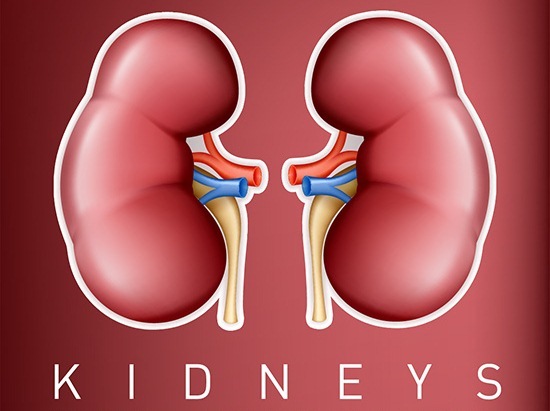
kidneys are 2 bean-shaped organs, each about the size of a fist. They are found
in your back on either side of the spine. Healthy kidneys clean waste products
from the blood by making urine. They also balance the amount of certain
elements in your blood (such as sodium, potassium, and calcium), and make
hormones that control blood pressure and red blood cells.
What is Kidney Failure?
Before
kidney failure occurs, patients have "chronic kidney disease" (CKD).
Kidney (renal) failure is when kidneys don't work as well as they should, to
the point where kidney replacement is required. Kidney replacement can be
accomplished by different kinds of dialysis or by kidney transplant. The term
"kidney failure" covers a lot of problems. These problems can result
in kidney failure:
- Your kidney
doesn't get enough blood to filter
- Your kidney is
hurt by a disease like
- high blood
sugar (diabetes)
- high blood
pressure
- glomerulonephritis
(damage to the kidney's tiny filters; one example: lupus)
- polycystic
kidney disease
- and many others
- Your kidney is
blocked by a kidney stone or scar tissue (blockage of ONE kidney
usually does not cause kidney failure because the other kidney is not
affected; but blockage of two kidneys can lead to an emergency).
The
symptoms of CKD are often quite mild; people may have significantly reduced
kidney function and not be aware of it. The symptoms of kidney failure can
differ based on how bad the kidney failure is, how quickly it is getting worse,
and what is causing it.
There
are 2 main types of kidney (renal) failure: acute (sudden) and chronic
(over time).
Acute Renal Failure – more commonly known
today as “acute kidney injury”(AKI)
AKI
occurs when the kidneys suddenly stop filtering waste products from the blood.
The
signs of AKI can be:
- swelling of the
hands, feet and face (edema)
- internal
bleeding
- confusion
- seizures
- coma
- abnormal blood
and urine tests
- high blood
pressure
Chronic Kidney Disease (CKD; previously
known as Chronic Renal Failure – CRF)
CKD
builds slowly with very few symptoms in its early stages.
A
patient with CKD may not have any symptoms until kidney function declines to
20% or less. At that stage, these signs may appear:
- abnormal blood
and urine tests
- high blood
pressure
- weight loss for
no reason
- low red blood
cell count (anemia)
- nausea
- vomiting
- metal taste in
your mouth
- loss of appetite
- shortness of
breath
- numbness and
tingling
- confusion
- coma
- seizures
- easy bruising
- itching
- fatigue
- muscle twitches
and cramps
- weak bones that
break easily
- itching
- swelling of the
hands, feet and face (edema)
- trouble sleeping
|
Stages of CKD |
GFR in mL/min |
Status of kidney function |
|
Stage
2 |
60-89 |
A
mild decline in kidney function |
|
Stage
3 |
30-59 |
A
moderate decline in kidney function |
|
Stage
4 |
15-29 |
A
severe decline in kidney function |
|
Stage
5 |
<15> |
Kidney
failure or end-stage renal disease (ESRD) requiring dialysis |
Causes
AKI
is most likely to happen with:
- low blood flow
(such as after complicated surgery or an accident)
- swelling
(inflammation) of the kidney (such as a reaction to a drug or infection)
- sudden blockage
(such as by a kidney stone)
- very high blood
pressure
With
AKI, the kidney often returns to normal or near normal after the cause is
treated.
CKD
is permanent loss of kidney function. The most common causes are:
- high blood
pressure
- chronic
glomerulonephritis (kidney damage)
- high blood sugar
(diabetes)
- polycystic
kidney disease
- blocked urinary
tract
Overall
kidney function is judged by the level of filtration that occurs. Filtration is
accomplished by the tiny blood vessels in the kidney called “glomeruli”. So
overall kidney function is called the “glomerular filtration rate” (GFR),
measured as the volume of blood filtered per minute (milliters/minute). Normal
values are about 100 ml/min, but varies with age and sex. GFR can be estimated
(eGFR) using formulas that take into account your age, sex and a blood test
called creatinine.
Kidney
failure is most often found when the creatinine level is high, indicating that
kidney function is reduced. Creatinine is a molecule made by your muscles. A
normal kidney will remove creatinine from the blood stream and get rid of it in
urine. More creatinine in the blood is a sign that the kidneys aren't cleaning
the blood as well as they should. This test can spot something is wrong before
a patient with kidney failure feels sick.
To
treat AKI, you have to treat the cause (such as blood pressure that is too high
or too low, a kidney stone or high blood sugar). Sometimes you need dialysis
for a short time.
With
CKD, treating the cause (such as high blood pressure and/or high blood sugar)
can slow the disease. The goal is to prevent CKD from turning into advanced
kidney disease, or end stage kidney disease (ESKD, formerly known as end stage
renal disease, ESRD).
When
kidney function falls below 10% of normal, dialysis or a kidney transplant is
usually needed, especially if you have signs of uremia (a buildup of waste in
the blood), like nausea, loss of appetite, weight loss and itching.
Dialysis
Dialysis
is a way to remove extra salt, acid, potassium and waste products from the
blood. The 2 types of dialysis are hemodialysis and peritoneal dialysis.
Hemodialysis:
For hemodialysis, a tube (catheter) is stuck into one of the veins in
your neck or leg. Preferably, an access, or arteriovenous fistula, is
constructed in the arm. Hemodialysis is most often done 3 times
a week for 3 to 4 hours at a time.
Peritoneal
dialysis:
Peritoneal dialysis is done through a tube permanently set in your
belly. Fluid is then run into the abdomen, takes out the extra salt and
potassium and water, and then removed. Most exchanges of fluid can be done by
an automated “exchanger” while you sleep.
Most
adults have dialysis done in an outpatient hemodialysis center. Most children
have peritoneal dialysis done at home. Peritoneal dialysis has a number of
advantages and is becoming more frequently used in adults in the US.
Kidney Transplant
A
kidney transplant is when a surgeon
puts a healthier kidney from another person into your body. Kidney transplant
is the best way to treat many patients with end stage kidney disease.
Kidneys
for transplant come from people who have agreed to donate their kidneys when
they die (deceased donors) or donated by healthy people (living donors). Living
donors are most often family members of the patient. There is a shorter wait
time to surgery for a transplant from a living donor. (This is because there is
a waiting list for kidneys from deceased donors and not enough donors.) Also,
patients with kidneys donated by living donors live longer (and the kidneys
last longer) than those with kidneys from deceased donors or who just stay on
dialysis.
With
modern medical techniques, the living kidney donor doesn't need to be a blood
family member to get a good result.
About
90,000 patients are on the wait list for deceased donor kidney transplants in
the U.S. But only 10,000 deceased donor kidney transplants are done each year
due to the lack of donated kidneys. Another 6,000 kidney transplants are done
each year from living kidney donors.
Write a public review