Cholecystitis

Published On - December 01, 2021
What Is Cholecystitis?
Cholecystitis is a swelling and
irritation of your gallbladder, a small organ in the right
side of your belly near your liver.
The gallbladder’s job is to hold a
digestive juice called bile. It releases bile into your small intestine when
your body needs it to break down fats. But if the path to your small intestine
is blocked, bile gets trapped. That backup can irritate your gallbladder.
That’s how cholecystitis happens.
Nausea and vomiting are common
symptoms. They often show up after you’ve eaten a big or especially fatty meal.
It’s easy to mistake cholecystitis
for other health problems, but another telltale sign is intense pain -- in your belly, in your back,
or under your right shoulder blade.
If you don’t see a doctor and get
treatment, it can lead to dangerous infections or become a long-term condition.
The most common solution is surgery to remove your gallbladder.
Cholecystitis Symptoms
Cholecystitis can mimic other
health problems, so you’ll need to see a doctor for a diagnosis.
You might feel a sharp, sudden pain
in the upper right side of your belly. You may also feel pain in your back or
below your right shoulder blade. Deep breaths may make it worse. Some other
symptoms to watch out for include:
- Nausea
- Vomiting
- Fever
- Bloating
- Yellow skin or eyes (jaundice)
- Bowel movements that
are loose and light-colored
Symptoms may get worse after a
high-fat meal. If you can’t get
comfortable or sit still because your pain is so strong, head to an emergency
room.
Cholecystitis Causes
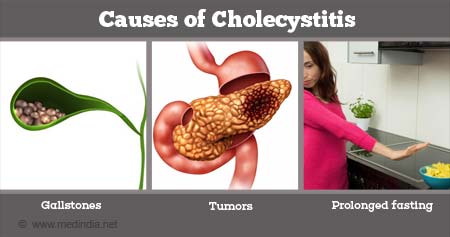
The usual reason bile backs up is
that gallstones -- lumps of bile turned
solid -- block the way to the small intestine. Gallstones are common. About 10%
to 20% of Americans have them. About half of people with gallstones will get
cholecystitis.
But gallstones aren’t the only
problem that can cause this condition. Others include:
- Gallbladder sludge, a thick liquid, builds up in the
organ. This can happen if you’re pregnant or if you’ve lost a lot of weight quickly.
- Tumors block bile’s path. A growth in your pancreas or
liver can stop it from draining.
- Your gallbladder doesn’t have a good blood supply.
People with diabetes can
have this problem.
- An infection affects your gallbladder. Bacteria can
damage the system that drains bile, causing it to back up.
Cholecystitis can come on suddenly.
You may hear a doctor or nurse call it an “acute” case. Or it can be a
long-term problem. Those cases are called “chronic.”
Cholecystitis Risk Factors
You have a higher chance of getting
cholecystitis if you:
- Are a woman older than 50
- Are a man older than 60
- Are overweight
- Have diabetes
- Are pregnant
Or if you have:
- Heart disease
- End-stage kidney disease
- Hyperlipidemia (when
your blood has too many lipids in it)
- Lost weight quickly
You also run a bigger chance of
getting it if your diet is high in fat and cholesterol or your ancestry is
Native American, Hispanic, or Scandinavian.
Cholecystitis Diagnosis
The doctor will examine you, ask a
few questions about your symptoms, and probably order some tests. You should be
ready to:
- Detail when your symptoms started. Have you felt
this way before?
- Describe how severe your pain is.
- Talk about whether anything makes your pain better
or worse.
Your doctor can tell from blood
tests whether you have an infection and whether your liver is working the way
it should. They may also want you to have some imaging tests. These may include:
- X-ray of your belly, which will show your internal
organs, bones, and tissues
- Ultrasound, which
will show your gallbladder and liver and let doctors check blood flow
- CT scan, which gives
doctors a more detailed look at organs, muscles, and bones than an X-ray
can
- HIDA scan, which checks how your gallbladder moves
and shows if bile is blocked. You get a shot of a chemical, and then a
scanner traces it as it moves through your body.
- PTC, which uses a dye injected into your liver to
show how bile is moving through your body
- ERCP, which uses a long, flexible tube threaded
down your throat, through your stomach, and into
your small intestine. It has a light and camera at the end. This test also
uses a dye to check how bile is flowing through your system.
Write a public review