Seborrheic Keratosis vs. Actinic Keratosis

Published On - August 08, 2026
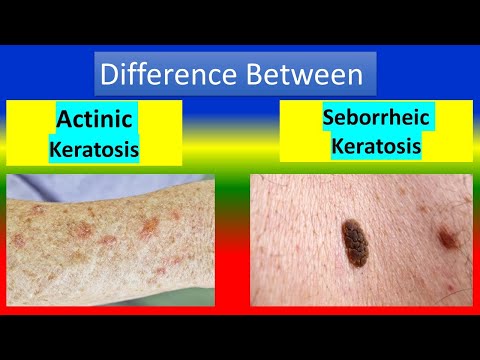
While there are both
similarities and differences in actinic keratosis vs seborrheic keratosis that
are important to know, it’s also important to understand what keratoses are.
Keratoses are keratinocyte cells that grow abnormally to form a keratin skin growth.
While keratoses are caused by damage to the same types of cells
(keratinocytes), the growths that result from this damage are different.
What is Actinic Keratosis?
Actinic keratosis is often caused
by sun damage and results in scaly or crusty growths. They are commonly found
on areas of the skin that are exposed to sunlight over a long period of time,
such as the hands, ears, lips, necks, and shoulders. Actinic keratosis is
pre-cancerous and can develop into skin cancer. You may have heard of skin
cancer being characterized as basal cell carcinoma or squamous cell
carcinoma.
Actinic keratoses only develop into squamous cell carcinoma.
What is Seborrheic Keratosis?
Seborrheic keratoses are a common
form of non-cancerous skin lesions that appear as you age. They are often brown
or tan in color and form on the chest, head, back, or neck. People usually have
these removed
for cosmetic reasons or
to prevent them from catching on clothing or jewelry. Seborrheic keratoses
never form into skin cancer.
How Can You Tell the Difference Between Actinic Keratosis vs
Seborrheic Keratosis?
The appearance of actinic keratoses and
seborrheic keratoses is very similar. Seborrheic keratoses are often mistaken
as skin
cancer.
Actinic keratosis forms into scaly, dry, crusty patches of skin called plaques.
These patches or plaques often form in clusters.
Plaques don’t move
and are usually flat or only slightly raised. These lesions are often easier to
feel than to see as they are rough in texture but can be skin colored. At
times, these growths may also be red, tan, white, or a combination of colors.
Actinic keratoses can bleed easily and may take longer to heal. In some cases,
the patches may be very sensitive, burn, or itch.
Seborrheic keratoses
can vary in how they appear. These growths are often rough and feel crumbly in
texture, but sometimes can be smooth and waxy. They can range in color from
light tan to black. These growths often look as if they have been stuck on the
skin like a sticker. Seborrheic keratoses can also vary in size, ranging from
very small to larger than three centimeters.
Similar to actinic
keratoses, seborrheic keratoses are usually flat or slightly raised. They also
form plaques that can either form alone or in a cluster. They also may bleed
easily and become itchy. These can form quickly and should be watched for
additional changes in shape, color, and size.
What Causes Actinic Keratosis and Seborrheic Keratosis?
Actinic keratosis is
most often caused by extended exposure to sunlight or artificial sunlight, like
that found in tanning beds. This does not mean you will form actinic keratosis
after spending a day in the sun. Actinic keratosis forms after years of
exposure to the sun and/or artificial sunlight.
People are more
likely to develop actinic keratosis if they are fair skinned. Actinic keratosis
most often forms in people over the age of 40 and is more common in men. People
who have outdoor occupations, live in sunny climates, and have experienced
frequent sunburns are at a higher risk of forming actinic keratosis. People who
have used tanning beds often are also at increased risk.
Seborrheic keratosis
differs from actinic keratosis in that it is not caused by sun exposure. While
the cause of seborrheic keratosis is unknown, most people who form seborrheic
keratoses often have a family history of the condition. Most people develop
seborrheic keratoses when they are 50 and older. While seborrheic keratoses are
not linked to any type of skin cancer, they have been linked to cancer in other
parts of the body
Write a public review